

MELANOMA
Overview
Melanoma is a serious form of skin cancer that arises from melanocytes, the cells responsible for skin pigmentation. Although less common than basal cell and squamous cell carcinoma, melanoma carries a significantly higher risk of spreading to lymph nodes and internal organs if not detected and treated early.
Melanoma can develop anywhere on the body, including areas not typically exposed to the sun. Early identification and prompt medical evaluation are critical, as outcomes are strongly influenced by the stage at diagnosis.
Common Signs and Appearance
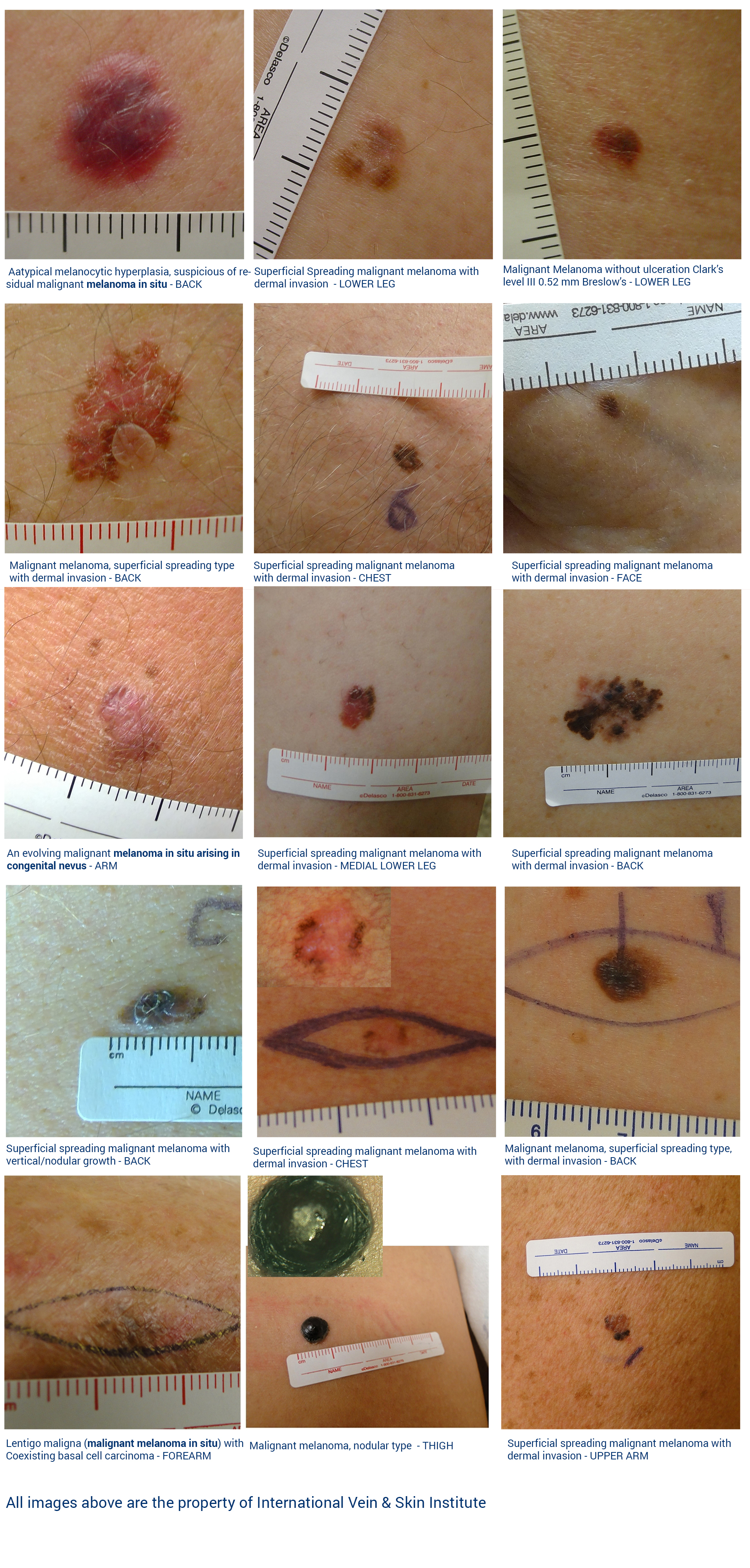
Melanoma may appear in many forms and does not always follow a predictable pattern. Warning signs may include:
- A new or changing mole
- A lesion that differs from others on the body (“the ugly duckling”)
- Asymmetry or irregular borders
- Uneven or multiple colors
- Increase in size, thickness, or elevation
- Bleeding, oozing, or crusting
- Itching or tenderness
Melanoma may develop within an existing mole or arise as a new pigmented or non-pigmented lesion.
Risk Factors
Factors that may increase the risk of melanoma include:
- History of intense sun exposure or blistering sunburns
- Fair skin, light hair, or light eyes
- Multiple or atypical moles
- Personal or family history of melanoma
- Use of tanning beds
- Weakened immune system
Melanoma can also occur in individuals without known risk factors.
Diagnosis
Early melanoma cannot be reliably diagnosed by visual examination alone.
Definitive diagnosis requires biopsy.
Depending on the lesion, diagnosis may involve:
- Excisional biopsy
- Punch biopsy
- Shave biopsy in select cases
The tissue is examined by a dermatopathologist, who determines whether melanoma is present and provides information regarding depth, margins, and other features that guide treatment decisions.
Treatment Options
Treatment of melanoma depends on the stage, thickness, and location of the lesion.
In early stages, surgical excision with appropriate margins is often effective. More advanced cases may require:
- Wider surgical excision
- Lymph node evaluation
- Referral for specialized oncologic care
- Additional therapies as recommended by oncology specialists
Prompt treatment significantly improves outcomes, particularly when melanoma is detected early.
Prognosis and Importance of Early Detection
Melanoma outcomes vary widely depending on how early the disease is identified. When diagnosed at an early stage, treatment is often successful. Delayed diagnosis increases the risk of local invasion and spread.
Regular skin examinations and timely evaluation of suspicious lesions play a critical role in early detection.
When to Seek Evaluation
You should seek prompt medical evaluation if you notice:
- A changing or irregular mole
- A new dark or unusual lesion
- A lesion that bleeds, itches, or does not heal
- Any pigmented lesion that appears different from others
Do not delay evaluation of concerning skin changes.
Seek Immediate Evaluation for Suspicious Lesions
Melanoma requires prompt medical evaluation and management.
📞 Call (847) 518-9999 to schedule an urgent dermatology evaluation.
Medical Disclaimer
The information on this page is provided for educational purposes only
and does not replace professional medical evaluation, diagnosis, or treatment.
Individual findings and treatment recommendations vary and require physician
assessment.
Learn More About