

Endovenous Laser Ablation (EVLA)
Endovenous Laser Ablation (EVLA) — also known as Endovenous Laser Treatment (EVLT) — is a minimally invasive, in-office procedure used to treat symptomatic varicose veins caused by chronic venous insufficiency (CVI). It is most commonly performed to close incompetent saphenous veins, which are a frequent source of venous reflux.
EVLA has been in clinical use for more than two decades and remains a well-established first-line treatment option when medically indicated, based on its safety profile and effectiveness.
How Endovenous Laser Ablation (EVLA) Works
EVLA treats varicose vein disease by closing the malfunctioning vein from the inside. The procedure is performed under ultrasound guidance to ensure accurate placement and patient safety.
A thin laser fiber is inserted into the diseased vein through a small skin puncture. Local anesthetic is then injected along the length of the vein within the saphenous compartment, providing pain control and protecting surrounding tissues.
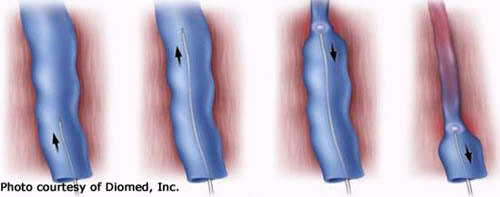
Controlled laser energy is delivered inside the vein, causing the vein wall to collapse and seal closed. The treated vein is closed and no longer participates in circulation, and blood is naturally redirected into healthy veins that continue to function normally.
Because the treated vein is already malfunctioning and no longer contributing effectively to circulation, closing it does not reduce blood flow. Instead, it helps reduce venous pressure and symptoms associated with chronic venous insufficiency. Over time, the closed vein is gradually absorbed by the body as part of the natural healing process.
Immediately After the Procedure
- A medical-grade compression stocking is placed on the treated leg
- Patients are asked to walk for 10–15 minutes in the office immediately after treatment
- Most patients are able to resume normal daily activities the same day
Patients whose work involves heavy lifting, squatting, ladder climbing, roofing, or prolonged physical strain may require temporary activity adjustments, which will be discussed individually.
What to Expect After EVLA
Endovenous Laser Ablation closes the treated vein but does not remove it. The closed vein is gradually absorbed by the body over time as part of the normal healing process.
The following symptoms are common and expected during recovery:
-
Mild to moderate soreness or tenderness for 2–3 days, depending on the size of the treated vein
Most patients are able to continue normal daily activities - A tightening or pulling sensation along the treated vein, often beginning several days after treatment
- Localized inflammation or tenderness, especially if the treated vein is close to the skin surface
- Bruising, which may last several days
These symptoms typically improve on their own as healing progresses.
Pain and Discomfort Control
Discomfort is usually mild and can be managed with over-the-counter medication:
-
Acetaminophen (Tylenol or Extra-Strength Tylenol)
Take 1–2 tablets every 4–6 hours as needed
Avoid the following medications unless otherwise instructed, as they may increase bruising:
- Aspirin
- Ibuprofen (Advil, Nuprin)
Compression Stockings
-
Wear
both compression stockings continuously for the first 24–72 hours, as instructed
- One stocking must be removed for sleeping to avoid excessive pressure during rest
-
After the initial 24–72 hours:
- Wear one compression stocking during the daytime
- Stockings may be removed for sleeping or showering
-
Handle compression stockings
carefully to prevent damage or loss of compression
- Damaged stockings may need to be replaced to maintain proper support
- Do not elevate your legs while wearing compression stockings
Activity Guidelines After Treatment
If your legs ache or throb:
- Walking or simple foot and ankle movements (pointing toes up and down) help stimulate circulation
- Regular movement throughout the day is encouraged
For the first two weeks after your procedure:
- Walk several times daily
-
Avoid:
- Vigorous exercise
- Lifting objects heavier than 15 pounds
- Prolonged standing or sitting without movement
- Avoid prolonged air travel
- Avoid long-distance car travel when possible; if necessary, stop every 2 hours to walk for 10–15 minutes
- If flying is unavoidable, wear compression stockings and keep legs moving during travel
Reducing the Risk of Infection
- Avoid swimming pools, lakes, or other potentially contaminated water until puncture sites are fully healed
- Avoid hot baths, hot tubs, and saunas for at least one month
- Shower using lukewarm water for several weeks after the procedure
Hot water may cause vein dilation and interfere with healing.
When to Contact Our Office
Please contact our office if you have questions or if you notice any of the following during your recovery:
- Fever of 100°F (38°C) or higher
- Worsening leg pain, swelling, or redness
- Persistent bleeding from the treatment site
- New or increasing numbness in the foot or toes
Our team is available to address concerns and guide you through the recovery process.
Seek Emergency Care if Needed
- Sudden shortness of breath
- Chest pain or chest tightness
- Difficulty breathing or pain with breathing
These symptoms may indicate a serious condition, such as a pulmonary embolism, and require urgent medical attention.
Schedule a Consultation
If you have been diagnosed with venous reflux or symptomatic varicose veins, EVLA may be an appropriate treatment option.
📞 Call (847) 518-9999 to schedule an evaluation.
Medical Disclosure
This information is provided for educational purposes only and does not
replace a personalized medical evaluation. Treatment recommendations and
outcomes may vary based on individual medical findings. A physician consultation
and venous ultrasound are required to determine whether EVLA or another
treatment is appropriate.
Learn More